

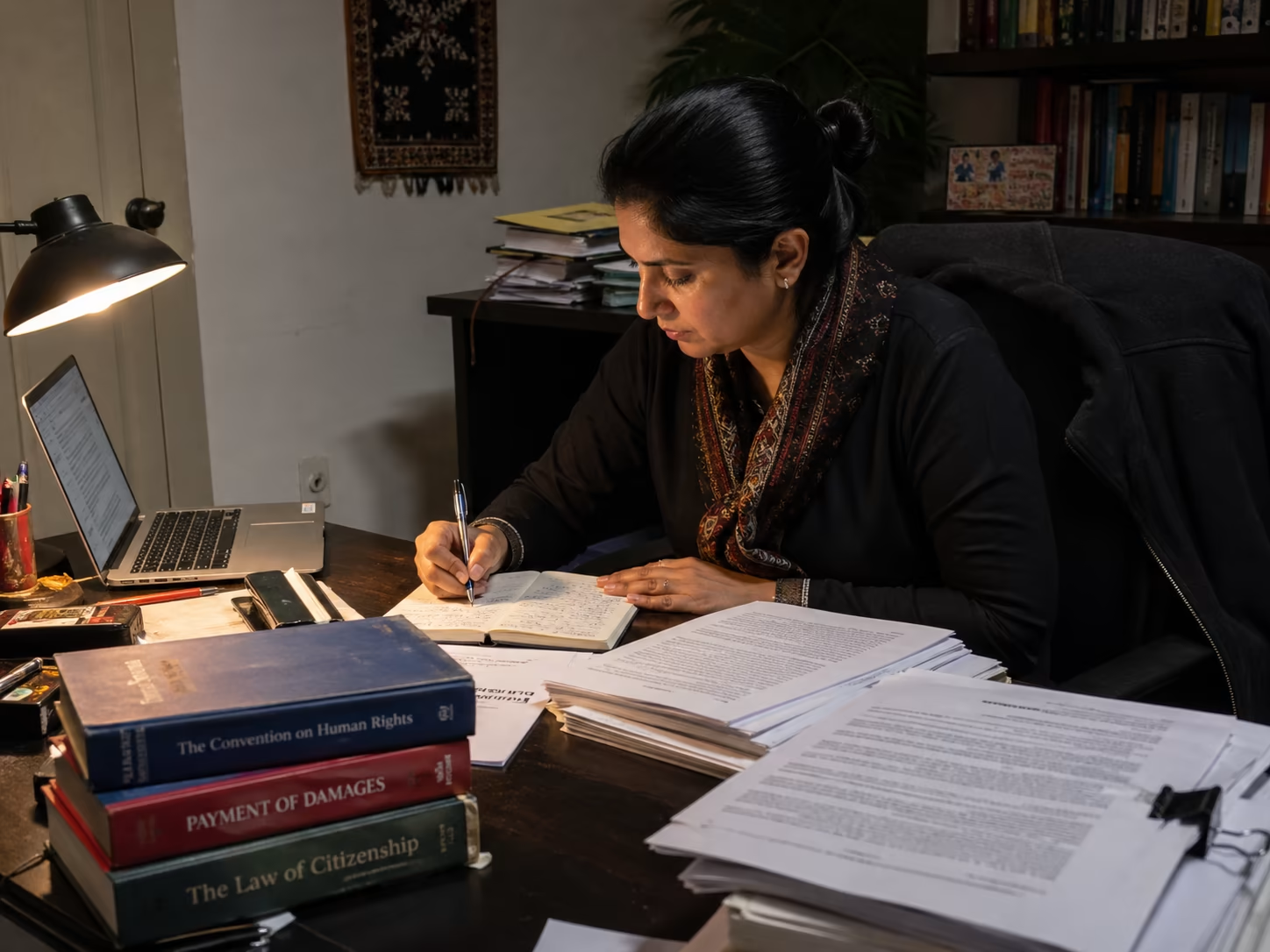
Preparing a record of a war crime is not merely collecting data; it is carrying the victim's story into history while protecting their dignity.
The method of testimony
Preparing a record of a war crime is not merely collecting data. Every piece of information carries a person's pain; to verify it is to place them inside that moment once again. That is why intent is as decisive as method.
International humanitarian law frames testimony not merely as a legal process but as a moral responsibility. How does one take a victim's statement without breaking them psychologically, without endangering their safety and without distorting their account? This question must sit at the centre of field-observer training.
Gathering evidence is hard; preserving that evidence without losing your humanity is far harder. As a lawyer, I have lived with this for years.
Ethics and verification
Every note coming from the field is assessed with regard to the safety of the witness, the accuracy of the information and the dignity of the victim. No information that has not been cross-checked through open-source research appears in the report. This is not a preference but a requirement of professional ethics.
Image verification, geolocation analysis and date identification have now entered the basic skill set of field observers. The ethical dimension, meanwhile, asks: does sharing this information endanger the witness or the victim? If the answer is uncertain, waiting is an obligation.
Throughout 2025, in the 140-page document we compiled from Gaza as an association, we verified 68 separate cases with at least three independent sources. This rigour made our report citable in international court proceedings.
Public impact
A well-documented testimony influences cases, enters the agenda of policymakers, and mobilises public opinion through the press. Our data, used as an independent source by 17 media organisations foremost among them Reuters and Al Jazeera, laid the ground for three urgent motions at the European Parliament.
Testimony is not telling what happened to someone; it is entering that account into the record of history. And history remembers the meticulous.